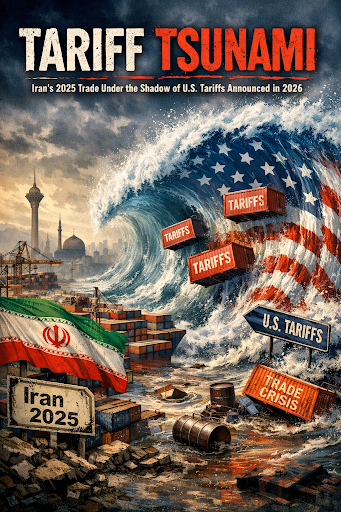
In January 2026, the United States stunned the global trade community by announcing a sweeping 25 % tariff on any country doing business with Iran — a policy shift that has sent shockwaves through international markets and could reshape global trade alliances.
What Changed: The U.S. Tariff Escalation
On January 12–13, 2026, U.S. President Donald J. Trump declared that all countries engaging in trade with the Islamic Republic of Iran would face a 25 % tariff on their trade with the United States. This measure is designed to punish not only Iran’s economy, but also the broader network of nations that maintain commercial ties with Tehran.
The announcement was made via social media and official statements, emphasizing that the policy is effective immediately and “final and conclusive.” However, full implementation details, enforcement mechanisms, and legal authorities have yet to be publicly clarified by the White House.
This tariff does not just target Iranian goods; it extends to secondary tariffs, meaning that nations importing Iranian products (especially oil) risk heightened duties on their exports to the U.S. — a tactic aimed at forcing global partners to sever economic ties with Tehran.
Global Backdrop: Iran’s Trade Position in 2025
Iran’s economy in 2025 was already under intense stress due to long-standing U.S. sanctions, ongoing protests, and domestic inflation. Rather than exporting directly to the United States, Iran conducts most of its trade with other countries — many of which now face the threat of high U.S. tariffs if they maintain business with Tehran.
Iran’s Major Export Partners
According to recent trade data, Iran exported goods to 147 global partners, with fuel (oil) being the dominant category. In 2025:
* China purchased more than 80 % of Iran’s shipped oil, making it Tehran’s largest export market.
* Other significant partners included India, Turkey, the United Arab Emirates (UAE), and Iraq.
* These trading relationships now face a direct challenge due to the U.S. tariff threat.
Iran’s Exports to the United States
Direct exports from Iran to the U.S. remain extremely limited, largely because of decades of sanctions. According to customs and trade data, total Iranian exports to the United States were minuscule in value and consisted primarily of small specialty items.
In the first 11 months of the Iranian year 1403 (March 2024–February 2025), Iran exported goods worth just about $172,621 to the U.S., including:
* Dried fruits like figs and apricots
* Saffron and traditional sweets
* Craft goods such as carpets and decorative statues
* Housewares and cast-iron tools
Clearly, direct bilateral trade between Iran and the United States in 2025 was negligible, meaning the dramatic tariff announcement is more symbolic — and strategic — than directly trade-impacting for Iran’s U.S. exports.
Strategic Implications: Why This Matters
This new tariff regime represents a different kind of economic strategy. Rather than simply targeting Iranian goods entering the U.S., it leverages the global trading relationships of third-party countries to isolate Tehran economically.
For example:
* Countries that rely on Iranian oil or petrochemicals may reconsider those ties if doing so jeopardizes their access to the U.S. market.
* Nations like China and India, which have substantial trade with Iran but also large stakes in U.S. economic relations, now face tough choices.
* Global supply chains could shift as manufacturers and exporters seek to avoid punitive tariffs.
Economists also warn that the tariff could deepen Iran’s domestic economic crisis, already marked by inflation and social unrest in 2025.
Looking Ahead: What to Watch?
* Will Iran’s trade partners continue importing Iranian oil at the cost of higher tariffs to the U.S.?
* Could this tariff strategy reshape Middle Eastern alliances or push nations toward alternative trade blocs?
* What diplomatic channels might emerge to avert a full economic standoff?
One thing is clear: the U.S. tariff announcement is not just about customs duties it is a geopolitical tool designed to amplify
economic pressure on Iran and its global network of trade partners.