
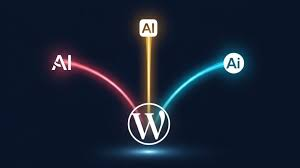
In a bid to stay ahead of the curve for its 43% of the web, WordPress has officially thrown its hat into the ring. The open-source giant has just released a trio of official plugins designed to seamlessly integrate the web’s most powerful large language models, Anthropic’s Claude, Google’s Gemini, and OpenAI directly into the CMS.
This isn’t just another round of third-party add-ons. This is the WordPress team getting its hands dirty, building official infrastructure that could fundamentally change how developers and site owners interact with their content. For the average user, it signals one thing: the era of truly intelligent websites is here, and you don’t need to be a coder to join the party.
A Unified Brain for Your Website
Gone are the days of cobbling together disparate code to make your site smart. The new plugins, officially titled AI Provider for Anthropic, AI Provider for Google, and AI Provider for OpenAI, are built on top of WordPress’s new PHP AI Client SDK.
Think of this SDK as a universal translator. Instead of plugin developers having to write custom, complex code for every single AI model they want to tap into, this client provides a single, standardized way to talk to all of them. As noted in the official documentation, it offers “a unified interface that works across all AI providers from simple text generation to complex multimodal operations”.
For the site administrator, this means managing your artificial intelligence tools just got a whole lot cleaner. You plug in your API keys (whether for Claude, Gemini, or GPT) in one central location, and any compatible plugin on your site can automatically use those credentials. No more logging into five different dashboards to manage five different AI tools.
Claude’s Reasoning Meets Gemini’s Eye
So, what can these new plugins actually do right out of the gate? While the functionality varies slightly by provider, the capabilities are impressive
-For the Wordsmiths (Anthropic Claude): The plugin supports text generation using various Claude models, but it also brings Claude’s unique “extended thinking” and function-calling capabilities to WordPress. This means you could theoretically ask Claude to analyze a set of user comments and then automatically categorize them based on sentiment, all within your dashboard.
-For the Creatives (Google Gemini): This integration taps into Google’s multimodal strength. Beyond text generation, it supports image generation with Imagen. You could prompt Gemini to create a featured image for a blog post, and it will generate one without you ever leaving the WordPress media library.
-For the Veterans (OpenAI): As expected, the plugin supports GPT text generation and DALL·E image generation. A standout feature here is the inclusion of web search support, allowing your AI to pull real-time information from the internet to keep your content fresh and accurate.
The “Telex” Factor and the Future of Building
This release is part of a much larger pivot for WordPress. Just last month, Automattic (the force behind WordPress.com) unveiled a new AI assistant that allows users to change site-wide layouts and styles using natural language commands. Want to “make this section feel more modern and spacious”? The AI just does it.
But perhaps the most intriguing development is “Telex,” an experimental tool that allows users to generate functional WordPress blocks and even entire plugins using simple text prompts. Combine this with the new MCP (Model Context Protocol) adapter released in WordPress 6.9, which allows desktop AI clients like Claude to directly control a WordPress site, and the landscape shifts dramatically.
Imagine telling your AI assistant, “Find all the posts from 2023 that are missing an excerpt, summarize them, and update the field.” With these new protocols, that’s no longer science fiction.
What This Means for the 9-to-5 User
While the developer-centric news is exciting, the ripple effects for small business owners and bloggers are tangible. The barrier to entry for advanced AI just got lowered. These official plugins require PHP 7.4 or higher and an API key, but they pave the way for a new generation of “no-code” tools.
Third-party developers are already jumping in. Plugins like MxChat and AIWU are offering access to 100+ models and advanced features like RAG (Retrieval-Augmented Generation), which allows the AI to be trained specifically on your website’s content, PDFs, and WooCommerce products to give hyper-relevant answers to customer queries.
The foundation is now laid. With WordPress 7.0 scheduled for early April, which will have the PHP AI Client SDK integrated natively, the CMS is no longer just a platform for hosting text and images. It’s becoming a dynamic engine that can see, write, reason, and even code for itself.
For the millions of sites running WordPress, the question is no longer if they will use AI, but which brain they will plug in.