

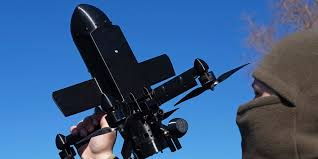
In a strategic pivot that underscores the global demand for modern warfare expertise, President Volodymyr Zelenskyy has confirmed that Ukraine is dispatching military teams to the Middle East, offering its battle-hardened knowledge of drone defense in exchange for something his war treasury desperately needs: money and technology.
Speaking to reporters over the weekend, Zelenskyy revealed that three specialized teams have been deployed to Qatar, the United Arab Emirates, and Saudi Arabia. The mission is twofold: to conduct expert assessments on how to counter the growing threat of Iranian-designed “Shahed” kamikaze drones and to demonstrate Ukraine’s low-cost, high-impact defense tactics.
However, unlike traditional military aid packages, this is not a gesture of goodwill. “For us today, both the technology and the funding are important,” Zelenskyy stated flatly when asked what Kyiv expects in return.
The ‘Drone Deal’ Model Goes Global
The move effectively exports the business model behind the “Drone Deal” that Ukraine has been desperately trying to finalize with the United States, a proposed $35 50 billion joint production agreement that remains stalled in Washington.
According to the President, the Gulf nations are facing the same Iranian-made threats that Ukraine has confronted nightly for over four years. While oil-rich Gulf states have deep pockets for expensive air defense missiles, Ukraine offers a cheaper, more sustainable alternative: interceptor drones, electronic warfare tactics, and the software expertise of operators who have survived thousands of attacks.
Zelenskyy was keen to draw a political red line regarding the deployment. “This has nothing to do with our involvement in the operations. We are not at war with Iran,” he clarified, emphasizing that the teams are there for “protection and a thorough, complete assessment” rather than direct combat.
What Ukraine Wants
The shopping list is specific. While cash is needed to keep Ukraine’s wartime economy afloat and finance its own massive drone production, the demand for “technology” is more complex. Kyiv is seeking access to advanced components, jamming-resistant systems, and potentially sophisticated air defense interceptors, specifically the PAC-2 and PAC-3 missiles used in Patriot systems.
“There is no secret here. We raise the issue of missiles that are in short supply for us,” Zelenskyy admitted, framing the assistance to the Gulf as a catalyst to unlock air defense capabilities that Ukraine desperately needs to hold the line against Russian aggression.
This arrangement highlights a growing concern in Kyiv: that the escalating conflict in the Middle East could distract Washington and drain global stockpiles of munitions that Ukraine relies on. “We would very much not like the United States to step away from the issue of Ukraine because of the Middle East,” Zelenskyy cautioned.
A New Global Commodity
The Ukrainian president noted that nearly a dozen countries across Europe, Africa, and the Middle East have sought Kyiv’s help in countering drone threats. This positions Ukraine not merely as an aid recipient, but as an emergent military service provider, a nation exporting the hard lessons of its survival.
This was further evidenced this week by a separate agreement with Romania to co-produce drones in Bucharest using Ukrainian technical expertise, backed by the European Defence Fund.
The Shadow of the US Deal
Despite the momentum in the Gulf and Europe, the shadow of the stalled deal with Washington looms large. Zelenskyy expressed frustration that the massive “Drone Deal” with the U.S. remains unsigned, admitting, “I do not know why Washington has not signed… I am not sure whether it will be agreed at all”.
U.S. President Donald Trump has publicly dismissed the need for Ukraine’s help, recently stating that the U.S. has “the best drones in the world” and does not require Kyiv’s assistance.
As Ukraine pivots toward the Gulf, it is effectively testing a new foreign policy doctrine: trading its most valuable current asset, real-time combat knowledge, for the financial and industrial means to continue its own fight. Whether these high-stakes tech-for-defense deals close the gap left by Washington’s hesitation will likely define Ukraine’s strategic autonomy in the years to come.