

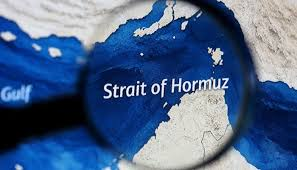
China’s Foreign Ministry confirmed on Tuesday that three Chinese vessels have successfully transited the Strait of Hormuz, a critical waterway at the heart of escalating tensions in the Middle East, expressing gratitude to “relevant parties” for the assistance provided during the passage.
The confirmation comes as the strategic strait, through which approximately 20 percent of the world’s oil supply normally flows, has become a focal point of the ongoing conflict following U.S.-led strikes against Iran. The waterway has been effectively closed to most international shipping for weeks, with only a handful of vessels receiving permission to pass.
“After coordination with relevant parties, three Chinese ships recently transited the Strait of Hormuz,” Foreign Ministry spokesperson Mao Ning told a regular press briefing in Beijing. “We express appreciation for the assistance of relevant parties”.
Mao did not identify which countries or entities assisted, but her remarks confirmed that Chinese vessels had successfully navigated through one of the world’s most volatile maritime chokepoints. She emphasized that the Strait of Hormuz and its adjacent waters are important international trade channels for goods and energy, reiterating China’s call for “an immediate ceasefire and cessation of hostilities to restore peace and stability in the Gulf”.
Stranded Vessels Finally Break Free
Vessel tracking data reviewed by this news outlet shows that two of the three vessels are ultra-large container ships operated by China’s state-owned shipping giant COSCO the *CSCL Arctic Ocean* and the *CSCL Indian Ocean*. Both vessels successfully passed through the strait on the morning of March 30, becoming the first large container ships to exit the Persian Gulf since the outbreak of hostilities.
The two vessels, built in 2015 with a capacity of 18,980 TEUs each, had been stranded in the Gulf for weeks. Industry sources say they had attempted to transit late last week but were forced to abort the mission midway. Their successful departure on Monday came after they broadcast their status via the Automatic Identification System (AIS), prominently marking that the “owner and crew are Chinese”.
The vessels are now sailing at relatively high speed toward the Gulf of Oman and are expected to arrive at Port Klang, Malaysia, by early April. A third Chinese vessel, which the Foreign Ministry confirmed as part of the transit, was not identified but is believed to be an oil tanker carrying Iranian crude.
A Narrow Window in a Closed Waterway
The successful transit marks a significant development in the maritime crisis that has gripped the Gulf region. According to shipping analytics firm Braemar Research, traffic through the strait has plummeted drastically since the conflict began. On average, only two laden tankers a day now exit the Gulf, down from approximately 30 before the war.
Clarkson’s data indicates that overall shipping activity in the Strait of Hormuz remains about 95 percent lower than pre-war levels. In the past week, only about 13 tankers have passed through, transporting roughly 14 million barrels of crude oil, a fraction of the approximately 250 tankers that normally carry around 300 million barrels weekly.
Iran has effectively controlled access to the strait, with Iranian officials declaring that all vessels must coordinate with Tehran and undergo inspections. Reports indicate that Iranian authorities have been demanding passage fees from shipowners and, in some cases, requiring vessels to carry cargo on Iran’s behalf.
Iran’s Foreign Minister Abbas Araghchi recently announced that “friendly countries”, including China, India, and Russia, would be permitted to pass through a designated safe corridor in the strait. The announcement effectively created a hierarchy among nations based on their economic and political alignment with Tehran.
The China-Iran Oil Connection
The successful passage of Chinese vessels underscores Beijing’s unique position in the ongoing conflict. China has maintained its oil trade with Iran despite years of U.S. sanctions, with more than 60 percent of Iran’s seaborne crude exports now estimated to end up in China, often routed through intermediaries or relabeled as originating from other countries.
For China, which sources approximately 45 percent of its oil from Gulf nations including Saudi Arabia, Iraq, and the UAE, maintaining access to the Strait of Hormuz is a matter of critical national interest. The country has built significant buffers in its energy supply chain, including stockpiling Iranian crude ahead of sanctions pressure, allowing flows to continue even when shipments slowed or became politically exposed.
The trade relationship between Beijing and Tehran operates through a complex financial mechanism. China reportedly purchases Iranian oil below market prices through so-called “petroyuan” agreements, selling goods to Iran in exchange for oil valued in Chinese currency—a system that has allowed trade to continue even under the pressure of U.S. secondary sanctions.
Regional Implications
The selective reopening of the strait to vessels from “friendly countries” signals a broader realignment in the region. Iran’s approach has effectively divided the world into categories based on economic behavior and diplomatic posture, with Beijing positioned firmly on the side permitted to continue operations.
China’s posture has been consistent throughout the conflict: avoiding confrontation while maintaining economic relationships. The same pattern was visible after Russia invaded Ukraine, when Beijing expanded trade with Moscow while carefully avoiding actions that would trigger coordinated Western sanctions.
For now, the successful transit of Chinese vessels through the Strait of Hormuz demonstrates that Beijing’s strategy of maintaining economic engagement while calling for peace has allowed it to preserve access to a waterway vital to its energy security. Whether that access will remain open as the conflict continues remains an open question, but for the three Chinese ships and their crews, the passage to open waters marks the end of an anxious wait.
“The Strait of Hormuz and waters nearby are an important route for international goods and energy trade,” Mao reiterated. “China calls for an immediate end to hostilities to restore peace and stability in the Gulf”.