

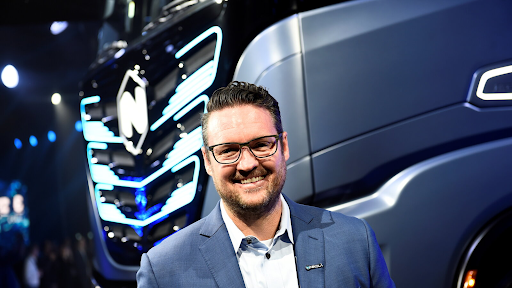
Trevor Milton, the disgraced founder of electric truck startup Nikola, who was convicted of fraud in 2022 for misleading investors about his company’s technology, has resurfaced with an unlikely new target: Tesla’s Semi.
In a 45-minute video posted to X (formerly Twitter) late Tuesday, Milton, currently awaiting sentencing after being found guilty on two counts of wire fraud and one count of securities fraud, laid into Tesla’s long-haul electric truck with a series of criticisms that range from predictable sour grapes to, surprisingly, a few points even Tesla bulls are quietly acknowledging.
“I’m not here to say Nikola was perfect,” Milton began, sitting in front of a generic gray backdrop. “But someone has to tell the truth about the Semi before more fleets waste millions.”
The attack points
Milton’s core argument centers on three areas: weight, charging infrastructure, and real-world range.
- Weight penalty: He claims Tesla’s Semi, with its massive battery pack, eats up so much payload capacity that haulers lose meaningful revenue per trip. “A diesel truck can carry about 45,000 lbs of freight,” Milton said. Tesla’s Semi? Closer to 35,000. That’s 10,000 lbs less per load. Do the math over a fleet.”
Public specs are scarce. Tesla has never released an official curb weight. But early users like PepsiCo have hinted that the Semi weighs roughly 27,000 lbs empty versus roughly 17,000 lbs for a diesel Class 8 tractor. A 10,000-lb penalty isn’t far off. For bulk freight, that’s real money.
- Charging hell: Milton pointed to the lack of megawatt-scale chargers outside Tesla’s own depots. “Elon showed a Megacharger; there are maybe a dozen in the wild. To replace just 1% of US long-haul trucks, you’d need thousands,” he said. “Where’s the grid capacity? Where’s the timeline?”
Even Tesla’s own initial customers rely on depot charging, not public infrastructure. For over-the-road trucking, that’s a dealbreaker.
- Range under load: Milton scoffed at Tesla’s claimed 500-mile range. “That’s empty, on a flat road, perfect weather,” he said. “Load it to 80,000 lbs GCWR, hit a mountain grade in winter, you’re stopping every 250 miles for a 90-minute charge. Truckers don’t work that way.”
Again, independent tests are limited. Real-world data from PepsiCo’s Sacramento-to-San Diego runs suggests around 450 miles with a full load in mild California conditions, not 500, and certainly not in a Wyoming blizzard.
The hypocrisy problem
Of course, Milton’s credibility is somewhere below the chassis of a rolling truck. He was convicted for repeatedly lying about Nikola’s own “Nikola One” hydrogen-electric truck, which famously rolled down a hill in a 2016 promotional video made to look like it was driving under its own power.
Asked for comment, a Tesla spokesperson said, “Trevor Milton is a convicted fraudster who built a company on fake product demonstrations. We don’t take criticism from people who don’t know the difference between a real truck and a gravity-powered prop.”
Fair point.
Are his arguments any good?
Here’s the uncomfortable truth: Milton is wrong on motive but right on some facts. The Tesla Semi is a technical marvel, fast, quiet, and cheaper per mile to fuel. But long-haul electric trucking does face brutal physics: batteries weigh a lot, charging takes time, and infrastructure lags.
Where Milton goes off the rails is his conclusion: “Tesla will never make a real long-haul truck.” That’s too absolute. Batteries are improving. Megachargers will come eventually. And for regional haul (200–300 miles per day), the Semi already works.
But for coast-to-coast freight? Milton’s points hold more weight than his reputation does.
As one fleet manager told me this morning, “A broken clock is right twice a day. Trevor’s clock is smashed to pieces, but one of those pieces happens to show the right time on weight and charging.”
Whether anyone should listen to a convicted fraudster is another question. But sometimes uncomfortable truths come from the unlikeliest and most discredited mouths.