
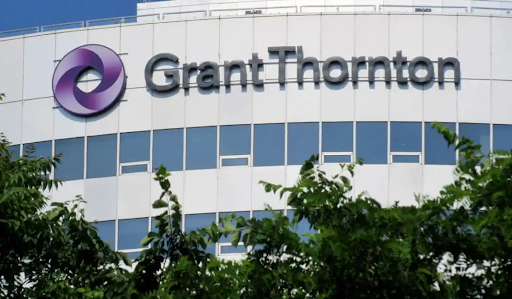
The $8.5 billion accounting and consulting giant is rolling out a controversial new metric that ties partner compensation directly to the firm’s internal AI adoption rates.
If you’re a partner at Grant Thornton’s U.S. arm, your next bonus isn’t just about landing that Fortune 500 audit or squeezing efficiency out of a tax season. Starting this fiscal year, a slice of your payout will depend on whether you and your teams are actually using the firm’s new generative AI tools.
The policy, effective for the current performance year, means that partners who fail to integrate the firm’s proprietary AI platform into their daily workflows could see a noticeable reduction in their year-end checks.
Let’s be clear: We’re not talking about a token checkbox. Grant Thornton has identified specific key performance indicators around AI, including how often partners prompt the system for data analytics, draft memos, review contracts, and even allocate resources for client engagements.
“This isn’t a pilot or a suggestion anymore,” one Grant Thornton partner quoted, speaking on condition of anonymity to discuss internal strategy. “Leadership is sending a message: If you’re still doing manual tick marks on a spreadsheet while our competitors are using AI to finish the same work in four hours, you’re a liability.”
The firm, which reported record global revenues of $8.5 billion last year, is betting big that financial incentives are the only way to break the stubborn habits of a risk-averse industry. Accounting is famously traditional. Partners get paid for being right, not for being fast. But the math is brutal: Rivals like KPMG and EY have already invested billions into AI alliances, and mid-tier firms are feeling the squeeze to keep up.
The ‘Carrot and Stick’ of 2025
Grant Thornton’s US managing principal for transformation, Sarah Hiner, confirmed the policy in a phone interview, framing it less as a punishment and more as a cultural correction.
“We’ve invested heavily in a custom AI layer that sits on top of our client data,” Hiner said. “It’s secure, it’s proprietary, and frankly, it’s expensive. We have partners who are all-in, and we have partners who are ‘AI curious’ but haven’t changed their habits. This bonus structure is designed to move everyone into the first group.”
Hiner declined to specify exactly what percentage of a partner’s bonus is on the line, but sources familiar with the plan say it ranges from 5% to 15%, depending on the partner’s service line. For a top-performing partner earning a $1 million annual payout, that’s a potential swing of $150,000.
The reaction inside the firm is, predictably, a mix of enthusiasm and quiet panic.
Younger partners and managers, many of whom have been using ChatGPT in their personal lives for two years, see the mandate as a green light to finally automate the tedious stuff: rolling forward prior-year workpapers, drafting initial risk assessments, or summarizing hundreds of pages of lease agreements.
But the old guard is grumbling. One senior partner in the firm’s Northeast audit practice likened the mandate to “being graded on how often you use a calculator when you already know how to do the math.”
“Clients pay for judgment, not for how many times I click a ‘generate’ button,” the partner said. “I worry we’re optimizing for speed and losing the skepticism that makes a good auditor.”
The ‘Use It or Lose It’ Economy
Grant Thornton isn’t alone. Across professional services, from law to consulting, firms are wrestling with the same problem: They’ve bought the enterprise licenses, but the humans aren’t logging on.
A recent survey by the Professional Services AI Coalition found that while 78% of large accounting firms have deployed generative AI tools, less than 25% of partners use them weekly. The gap represents millions of dollars in sunk software costs and a competitive risk.
By tying bonuses to usage, Grant Thornton is effectively admitting that voluntary adoption failed.
The firm is also rolling out “AI fluency” training boot camps, though insiders note attendance jumped significantly after the bonus memo went out.
For clients, the change might be invisible, or it might be a selling point. Grant Thornton is already marketing its “AI-augmented audit” as faster and more accurate. If partners are forced to use the tools internally, the logic goes, they’ll be better at selling those tools to nervous CFOs.
“In five years, we won’t be talking about this policy because using AI will be like breathing,” Hiner said. “But right now, we have to get over the hump. And in a partnership model, you get over the hump by aligning the economics.”
Whether that leads to a wave of early retirements or a sudden burst of innovation remains to be seen. But one thing is certain: Next year’s partner retreat just got a lot more interesting and a lot more awkward for anyone who still prefers a yellow legal pad.