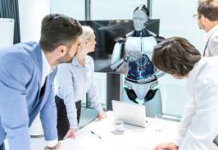
The ritual feels almost ancient now. The crisp suit, the firm handshake, the printed CV placed carefully on the edge of the interviewer’s desk. For generations, this was the gateway to employment, a deeply human ritual of judgment and connection.
Today, before most candidates ever meet a human, they’ve already been screened by an algorithm, assessed by a chatbot, and ranked by a machine that has analyzed thousands of data points in the time it takes to blink.
Artificial intelligence has moved from the margins of hiring to its very center. And 2026 is shaping up as the year when the transformation becomes impossible to ignore.
The Decline of the Traditional CV
The traditional CV, a carefully curated document listing degrees, job titles, and tenure, is losing its place as the currency of hiring. According to the Hiring Trends Report 2026 from recruitment technology platform Willo, four in ten employers no longer rate CVs as one of the most dependable ways to judge talent.
Only 37% of employers still see credentials and learning history as reliable signals of capability. The reason? AI has made it nearly impossible to know whether a human or a machine wrote that polished summary of achievements.
“The CV used to tell a story of effort, experience, and aptitude,” said Euan Cameron, chief executive and co-founder of Willo. “Now it often tells us how well someone can prompt a large language model. Great candidates are getting lost in a wall of near identical applications, and the best hiring teams are catching on to that.”
In response, 41% of respondents are moving away from CV-first hiring. Another 10% say CVs have been largely replaced with skills-based and scenario-driven tests designed to assess actual capability rather than the ability to craft a compelling narrative on paper.
The Rise of the AI-Fluent Worker
As routine tasks migrate to machines, a new class of employee is emerging. Universum’s 2026 Talent Outlook report identifies what it calls “Superworkers” – high-performing employees who actively use and develop AI skills, are optimistic about AI’s role at work, and expect employers to enable them to deliver higher-impact output.
This group represents just 10% to 15% of the global talent pool, according to the research.
“Superworkers are created where AI adoption is also supported by leadership, the culture, and the learning,” explained Kortney Kutsop, Universum’s chief sales officer. “It’s not just about technology. Superworkers want to move faster. They want to learn. They want to have even bigger influence.”
The message for employers is clear: AI fluency is becoming a baseline expectation. LinkedIn data shows a 70% year-over-year increase in US roles that require AI literacy, reflecting a fundamental shift in what companies expect from new hires.
Despite widespread fears of AI-driven job losses, the technology is actually creating roles at a significant scale. LinkedIn data reveals that AI has added 1.3 million new jobs globally in just two years, including more than 600,000 new AI-enabled data centre positions and roles such as AI Engineers, Forward-Deployed Engineers, and Data Annotators.
The Enduring Value of Human Skills
Yet as AI takes over technical tasks, distinctly human capabilities are gaining value. Universum’s research highlights growing employer demand for agility, creativity and innovation, adaptability and flexibility, problem-solving, integrity and ethics, and emotional intelligence.
The World Economic Forum’s recent white paper on new economy skills points to the growing importance of human-centric capabilities such as creativity, innovation and adaptability – abilities that are both hardest to automate and increasingly valued by employers navigating an uncertain landscape.
Dexian’s 2026 Work Futures study found that 84% of employers plan to put more emphasis on human skills, and 87% of workers believe companies need to do so. The research suggests a growing recognition that while machines can process information at unprecedented speed, they cannot replicate judgment, empathy, or the ability to navigate complex human dynamics.
Amid this transformation, a troubling gap has emerged between employer confidence and worker trust. While 51% of employers say their organization is very prepared to adapt to technological advancements – up from 38% in 2025 – workers see things differently. Only 21% of workers say they completely trust their employer to handle AI and automation fairly. Twenty-seven percent report little to no trust in their organization’s approach to AI implementation.
Pew Research shows workers are more worried than optimistic about AI expansion at work, and many fear becoming obsolete as AI skills become mandatory for promotion and mobility. This trust deficit represents a significant challenge for companies navigating the transition.
What’s Next for Job Seekers
As AI agents take on a greater share of routine decisions, business leaders are preparing for hybrid workforces in which humans and machines operate side by side. Gartner predicts that AI agents will outnumber human sales staff within the next few years, prompting executives to track new indicators such as the ratio of AI agents to employees.
Marc Benioff, CEO of Salesforce, recently observed that current leaders are “the last generation to manage entirely human workforces.” The implication is clear: the nature of work is fundamentally changing, and the pace of change will only accelerate.
For job seekers entering this new landscape, the message is nuanced but urgent. AI fluency is becoming as fundamental as reading and writing. Candidates who cannot demonstrate familiarity with AI tools will find themselves at a growing disadvantage. But so too are the human qualities that machines cannot replicate: judgment, empathy, creativity, and trust. The workers who thrive will be those who can bridge both worlds.
The algorithm will see you now. What happens next depends on what you can bring.