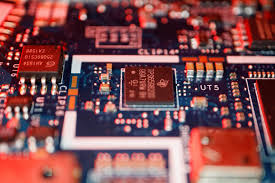
For years, Nvidia has been the undisputed kingmaker of the artificial intelligence revolution, its chips powering everything from ChatGPT to military simulations. But the Trump administration is now moving to formalize its own role in that hierarchy with a proposal that would give Washington final say over where those chips go, who gets to use them, and under what conditions.
The draft regulations, first reported by Bloomberg and confirmed by multiple outlets, would require companies to seek US government approval for virtually all exports of advanced AI accelerator chips made by Nvidia, AMD, and other American firms. Currently, such restrictions apply to about 40 countries, mostly adversaries like China, Russia, and Iran. The new framework would extend that oversight globally.
The proposal isn’t final; officials across federal agencies are still providing input, and the language could change substantially or even be shelved. But the message is clear: the United States intends to be the gatekeeper of the world’s AI infrastructure.
The ‘Gatekeeper’ Strategy: How the Licensing System Would Work
The draft framework envisions a tiered approval process based on how much computing power a company wants to deploy. Small shipments up to 1,700 of Nvidia’s current H100 chips or 1,000 of the upcoming GB300 graphics processing units would undergo relatively simple reviews with certain exemption opportunities.
Companies planning larger clusters would need pre-clearance before seeking export licenses. They could face conditions such as disclosing their business models or allowing US government site visits, depending on the specifics of the data centers in question.
For truly massive deployments of more than 200,000 of Nvidia’s GB300 GPUs owned by one company in a single country, the host government would have to get directly involved. For context, that’s roughly the scale British firm NScale is planning to provide to Microsoft across four sites in the US and Europe, a deal described as “one of the largest AI infrastructure contracts ever signed”.
The US would only approve such massive exports to allies that make “stringent security promises” and what the administration calls “matching” investments in American AI, though the draft rule doesn’t specify an investment ratio.
“The specific approval process would depend on how much computing power a company wants,” one person familiar with the ongoing policy debate told Bloomberg.
Market Reaction: Nvidia and AMD Shares Slide
News of the draft rules hit Wall Street hard. NVIDIA shares fell as much as 1.9% in after-hours trading, while AMD dropped 2.3%. The decline reflects investor anxiety about what a global licensing regime could mean for companies that have built their fortunes on unrestricted access to international markets.
The proposed expansion comes just weeks after the administration quietly eased restrictions on certain chip exports to China. In January, the Commerce Department’s Bureau of Industry and Security issued a final rule allowing case-by-case review for exports of Nvidia H200 and AMD MI325X chips to China and Macau, provided they meet strict conditions, including independent lab testing in the US.
That January rule shifted policy from a “presumption of denial” to a “case-by-case” review for chips falling below specific performance thresholds—roughly one generation behind the cutting edge. The new global framework would not change Washington’s approach to China specifically, according to people familiar with the matter, but would dramatically expand oversight everywhere else.
What the US Wants: Security Promises and ‘Matching’ Investments
The administration’s stated goal is straightforward: keep the world using American AI technology rather than Chinese alternatives . But the draft rules reveal a more complex set of objectives.
Countries seeking significant AI infrastructure would need to make commitments on security and investment. The UAE learned this firsthand last year, when the US conditioned chip shipments on the Gulf nation investing $1 in America for every dollar spent at home . Licenses eventually flowed, but only after months of delay.
A major unknown is how much money the US would expect from countries like France or India, which have ambitions to build data centers of 1 gigawatt or more . Another factor is how Trump may wield chip curbs in broader diplomatic negotiations, especially as he recalibrates his tariff strategy. Last year, the president threatened semiconductor export controls in retaliation for digital services taxes imposed in places like the European Union .
Also unclear is how the US will handle restrictions on “model weights” the numerical parameters that AI software uses to process data and make decisions, considered among the most valuable intellectual property in the world . The Biden administration’s global chip framework included overarching restrictions on where companies could host frontier model weights. Trump’s approach would handle that question through individual licenses .
The China Factor and Limited Options for Allies
Behind the entire proposal lurks the specter of Chinese competition. Washington has consistently sought to limit China’s AI ambitions, restricting exports of semiconductor manufacturing equipment and, under Trump, allowing Nvidia back into China to compete on Huawei’s home turf .
The new global rules wouldn’t change the approach to China directly, but they would have significant knock-on effects. One direct consequence would be better US government visibility into global chip flows, which some officials have long argued is necessary to detect semiconductor smuggling .
The US could also use export licenses to regulate Chinese firms’ access to AI chips overseas something national security hawks have long advocated. They’ve already started: Trump’s team conditioned some Nvidia shipments to the UAE on firms not providing computing services to any Chinese AI companies . It remains to be seen whether they impose similar terms in other regions like Southeast Asia, where firms like Alibaba Group rent Nvidia chips they cannot buy directly .
For foreign leaders, the situation is deeply uncomfortable. “They’re broadly uncomfortable subjecting their tech futures to Washington’s whims,” one analysis noted . But when it comes to computing power, they have little choice. Countries can either import chips from American companies like Nvidia—the market leader by a wide margin—or Chinese firms like Huawei, which makes less-powerful chips in much smaller quantities .
And lest they consider the latter, Washington has made its position clear: using Huawei AI accelerators anywhere in the world could violate American trade restrictions .
The draft framework isn’t final. Officials are still providing input, and the rules could change substantially or be shelved entirely . But for an industry accustomed to operating in a global market, the message is unmistakable: the era of unfettered AI chip exports may be coming to an end.