

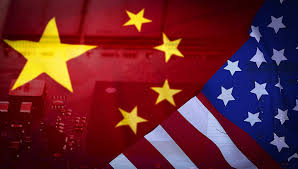
For the better part of two decades, the story of China’s technological rise was written in the language of the catch-up game. Faster trains, bigger factories, more smartphones, always chasing, always closing the gap. But if you read the fine print of the policy blueprint just unveiled in Beijing, that story just got a rewrite.
China has officially abandoned its pursuit of the role.
As the curtains closed on this year’s National People’s Congress, the ruling Communist Party unveiled its 15th Five-Year Plan, a 141-page document that doesn’t just aim to match the United States. It talks about leading it. The language is deliberate, the targets are staggering, and the message to Silicon Valley is unmistakable: the race isn’t about catching up anymore. It’s about setting a pace that others will have to follow.
“We must win the strategic initiative,” the plan states flatly, framing technological dominance not as an economic talking point, but as a national security imperative. This isn’t bravado. It’s a cold calculation born of the Trump administration’s export curbs and the sudden, jarring realization that when the US cuts off chip supplies, a trillion-dollar economy can be made to hold its breath.
A 90% AI Diet: Starving Out American Software
The most striking target in the new plan is also the most audacious: by 2030, China wants 90% of its corporate artificial intelligence adoption to run on domestic AI models, not American ones. This isn’t just an industrial policy; it’s a deliberate act of technological divorce.
For years, Chinese developers quietly built their platforms on the backbone of US innovation. OpenAI, Google’s Gemini, Anthropic’s Claude, these were the gold standards. But the 15th Five-Year Plan explicitly names domestic firms like DeepSeek and Alibaba as the future, effectively telling the Chinese industry to kick the American habit. The strategy is to starve US AI of the Chinese market while force-feeding local champions the data and capital they need to compete globally.
The impact is already visible. DeepSeek, the homegrown AI startup that stunned analysts last year by closing the performance gap with US labs, was expected to drop its next-generation model, V4, during the Congress session. It didn’t. Industry insiders whisper that the delay is tied to a government push to strip out remaining NVIDIA chips and replace them with domestic alternatives from Huawei. Whether the delay is technical or political, the message is the same: compliance is mandatory.
The Semiconductor Pivot: Overtaking by Switching Lanes
Everyone knows China has a semiconductor problem. It cannot buy ASML’s extreme ultraviolet lithography machines, the Dutch titans that carve the impossibly tiny circuits on cutting-edge chips. It cannot match TSMC or Samsung in the nanometer arms race. So, it has decided to change the race entirely.
The new plan elevates “advanced packaging” and “chiplet design” to the level of national strategic tasks. Instead of obsessing over making one tiny, perfect chip, Chinese engineers are focusing on stitching together multiple, slightly older chips to perform like one new one. It’s the technological equivalent of taking four solid engines from a Toyota and turbocharging them to outperform a Ferrari.
By shifting focus from the microscopic precision that Western powers dominate, Beijing is betting on a “lane-switching” strategy. Hubs in Suzhou and Wuxi are being transformed into packaging megacenters, funded by the state’s massive semiconductor investment fund. If it works, it could render the US’s entire export control regime partially obsolete not by breaking the rules, but by building a different game entirely.
Morgan Stanley analysts noted this week that China’s AI GPU suppliers are already making “substantial progress” in mitigating equipment bottlenecks, predicting that domestic capacity could meet core sovereign needs by 2028. The economics are starting to make sense, too. With lower hardware costs and cheaper electricity, the “total cost of ownership” for Chinese data centers is becoming deeply competitive, particularly for the “inference” side of AI, the part where the model actually thinks about users.
The Geopolitics of Cheap Tech
If China succeeds in building a parallel, self-sufficient tech universe, the rest of the world will have a choice to make. And that choice terrifies Washington.
Rory Green, chief China economist at TS Lombard, put it bluntly in a recent interview: “For the first time in history, an emerging market economy is standing at the scientific and technological frontier”. That matters because China is the number one trading partner for dozens of developing nations. When those nations look for a tech stack for 5G networks, AI tools, data centers, and solar grids, they will see a Chinese option that is cheap, functional, and comes with low-interest loans attached.
“The choice is between low-cost Chinese technology and high-cost Western alternatives,” Green said. “For these economies, I think the choice is quite simple”. In five to ten years, he posits, a majority of the world’s population could be operating on a Chinese-built technological foundation.
Ambition Meets Reality
None of this is to say the road is smooth. China’s economy is wrestling with a property crisis, local government debt, and the lowest growth target in 35 years. The plan acknowledges an “acute” imbalance between what the country can produce and what its citizens can afford to buy. Domestic consumption remains stubbornly weak, and the demographic clock is ticking.
But the bet Beijing is making is that technology can outrun demography. The plan name-checks AI over 50 times, envisions humanoid robots plugging labor shortages, and pushes for breakthroughs in quantum computing, brain-computer interfaces, and nuclear fusion. It’s a “high-stakes rebalancing,” as one analyst put it, where the government is essentially betting the house on the idea that owning the future’s tools matters more than fixing today’s leaky roof.
For the United States, the challenge is no longer about keeping China down. It’s about recognizing that the competitor is no longer running the same race. China isn’t trying to build a better Silicon Valley. It’s trying to build something that makes Silicon Valley look like just another regional hub. And as the 15th Five-Year Plan makes clear, they believe the window for that transformation is open right now.