
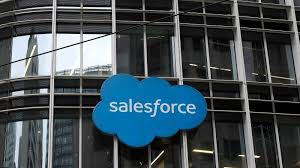
The largest financial flex of its kind, Salesforce has fired the starting gun on a historic $25 billion accelerated share repurchase, instantly removing roughly 103 million shares from the public float in a move that CEO Marc Benioff declares is born of “increased conviction” .
The software colossus announced Monday that it has commenced prepayment and initial share delivery under agreements signed last week with a syndicate of Wall Street heavyweights, including Bank of America, JPMorgan Chase, and Morgan Stanley. The transaction represents the immediate execution of half of the $50 billion repurchase program authorized by the board just last month.
“We are aggressively repurchasing shares because we are so confident in the future of Salesforce,” Benioff stated, framing the move as a declaration of faith in the company’s trajectory during what it calls the “Agentic Era” of artificial intelligence.
How an Accelerated Buyback Works
For the uninitiated, an accelerated share repurchase (ASR) is the corporate equivalent of a blitzkrieg. Instead of nibbling at shares on the open market over months or years, Salesforce has handed a bundle of cash to its banking partners, who will immediately deliver the bulk of the shares, in this case, about 80% of the total expected, back to the company for retirement.
The final tally of shares repurchased will hinge on Salesforce’s volume-weighted average stock price over the coming months, with a final settlement expected in the latter half of fiscal 2027. This structure allows the company to make a massive, immediate impact on its share count while transferring the execution risk and potential upside to the banks.
The Mechanics: Debt-Fueled Confidence
The sheer scale of the buyback raises an eyebrow: where does the cash come from? Salesforce isn’t just dipping into its mattress. Earlier this month, the company priced a $25 billion public offering of senior notes, effectively borrowing the money to fund the repurchase. This is a leveraged bet on its own stock.
The strategy signals that management believes its shares are undervalued and that borrowing at current rates to buy them back will generate superior returns for remaining shareholders. Robin Washington, the company’s President and CFO, underscored this sentiment, noting the move “reflects our increased conviction in the durability of our growth and cash flow trajectory”.
A Stock Under Siege
The timing is telling. Salesforce shares have been battered over the past year, sliding roughly 26% in 2026 alone amid broader fears that generative AI could cannibalize demand for traditional enterprise software. The stock is down over 29% over the last twelve months, a brutal stretch for a company that was once the unassailable darling of cloud computing.
Yet the company’s fundamentals tell a more nuanced story. In its fourth-quarter earnings report last month, Salesforce posted adjusted earnings of $3.81 per share, crushing analyst estimates of $3.05, on revenue of $11.2 billion. Remaining performance obligations, a key metric for future revenue, grew 16% year-over-year to $35.1 billion. The company is profitable, it’s growing, and it’s generating cash. So why the stock swoon?
The market has been punishing software names on AI anxiety, but some prominent voices are pushing back. Analyst Dan Ives has added Salesforce to his AI-focused watchlist, signaling a potential turning tide for software stocks.
What It Means for Investors
For current shareholders, the math is straightforward but powerful. Retiring 103 million shares, representing about 13% of the company’s outstanding float, immediately increases everyone’s proportional ownership. Earnings per share will get a mechanical boost, as the same profit is now divided among fewer shares.
The market’s initial reaction was muted but positive, with shares trading up about 2% in pre-market activity. On Stocktwits, however, retail sentiment remained bearish, reflecting the deep skepticism that has gripped the stock.
There is also a subtle shift in capital allocation philosophy at play here. Under pressure from activist investors in recent years, Salesforce has pivoted from its acquisition-happy past toward a more disciplined return-of-capital posture. This buyback, alongside a dividend increase announced in February, signals that the era of empire-building may be giving way to an era of shareholder appeasement.
The Road Ahead
The remaining $25 billion of authorized repurchases looms on the horizon, a potential catalyst should the company choose to deploy it. For now, the message from Salesforce’s C-suite is unambiguous: we think the stock is cheap, we’re putting $25 billion of borrowed money behind that belief, and we’re doing it immediately.
Whether the market eventually agrees with that conviction is a question that will be answered in the quarters to come. But for one day in March, Marc Benioff and company made the largest statement possible that they believe the best days for Salesforce are still ahead.
CRM shares were trading at $196.26 in morning trading, up 1.78% on the day.