
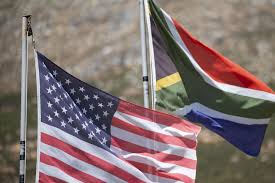
Washington has opened a sweeping trade probe into South Africa and 59 other nations, threatening economic ties at their most fragile moment in three decades.
The Office of the United States Trade Representative (USTR) confirmed this week that it has initiated Section 301 investigations into countries over concerns that goods produced with forced labour are entering US markets, creating an uneven playing field for American workers. The probe arrives as diplomatic relations between Washington and Pretoria plummet to their lowest point since the end of apartheid.
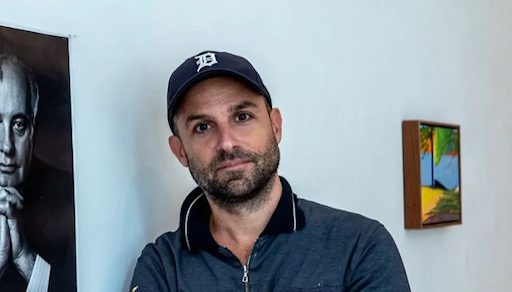
Just days before the investigation was announced, South Africa summoned newly appointed US Ambassador Leo Brent Bozell III to explain what Pretoria termed “undiplomatic remarks” regarding the country’s domestic policies and international alliances. Trade experts suggest the investigation represents Washington’s Plan B following recent legal setbacks that struck down previous tariff measures.
Washington’s Five Unanswered Demands
Speaking at the BizNews Conference in Hermanus last week, Ambassador Bozell revealed that Washington presented the South African government with “five asks” approximately one year ago aimed at restoring trust. According to the ambassador, those questions remain unanswered.
The demands encompass both domestic policy concerns and foreign alignment issues. Washington seeks clarity on South Africa’s expropriation without compensation policies, its BBBEE framework, and the government’s stance on farm murders. The US has also requested that Pretoria condemn the “Kill the Boer” chant, which Washington views as hate speech, address its deepening engagement with Iran, Russia, and China.
“We’ve been waiting for almost a year for a response, and as I’ve made clear in meetings that I’ve had, we’re running out of patience,” Bozell stated.
We Will Not Be Bullied: Ramaphosa Digs In
South Africa’s response has been defiant. Following Bozell’s remarks, the Department of International Relations and Cooperation issued a formal diplomatic protest. Minister Ronald Lamola made clear that while South Africa welcomes engagement, foreign envoys must respect established protocols and judicial sovereignty.
“We will not be bullied,” President Cyril Ramaphosa has repeatedly stated, signaling a hardening of Pretoria’s position. The President’s stance reflects a broader strategic calculation: that South Africa can weather the storm by diversifying international partnerships. On the same day Bozell delivered his critical address, Ramaphosa was on a state visit to Brazil discussing deepened defence cooperation.
Analysts suggest Pretoria has concluded that explaining its positions to an administration seemingly determined to view them through a hostile lens is largely futile. However, this posture carries significant risk. South Africa’s automotive, citrus, wine, and mineral sectors rely heavily on preferential access to the US market.
Forced Labour or America First?
While the investigation publicly centers on forced labour concerns, experts argue it represents a broader realignment of US trade policy. US Trade Representative Jamieson Greer framed the probe as necessary because “governments have failed to impose and effectively enforce measures banning goods produced with forced labour.”
Under Section 301 of the Trade Act of 1974, the USTR has broad authority to respond to foreign practices deemed “unjustifiable, unreasonable, or discriminatory.” If the investigation yields adverse findings, Washington could impose tariffs, fees, or other restrictions. Public hearings are scheduled for April 28, 2026.
Dr. Seshupo Mosala, an international relations expert at North-West University, offered a stark assessment: following the Supreme Court’s rejection of Trump’s tariff programme, the administration needed alternative mechanisms. “This is where forced labour comes into play,” he explained. “It is basically doing the same thing, but through a different method.”
AGOA in the Crosshairs
At stake is South Africa’s participation in the African Growth and Opportunity Act (AGOA), the cornerstone of US-Africa trade since 2000. South Africa is the largest US trade partner in sub-Saharan Africa, with bilateral trade valued at approximately $15 billion annually. More than 600 US companies operate in the country, employing over 250,000 South Africans.
AGOA was renewed in February 2026 and will remain in effect until December 31, 2026, but eligibility remains subject to review. The current investigation could provide the evidentiary basis for Washington to argue that South Africa no longer meets program criteria.
Congressional pressure is already mounting. The US House recently passed legislation requiring a full review of whether South Africa “has engaged in activities that undermine US national security or foreign policy interests.” Republican Representative John James argued on the House floor that “the ANC of today is no longer the party of Mandela.”
South Africa has reportedly dispatched envoys to make its case in Washington ahead of the April hearings. Whether diplomatic engagement can bridge the widening gap remains an open question but with both sides showing little appetite for compromise, the trajectory appears set for further turbulence.