

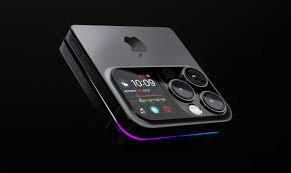
For years, the tech world has operated on a single, unspoken assumption: Apple is working on a foldable iPhone. While competitors like Samsung, Google, and OnePlus have flooded the market with devices that bend, flex, and crease, Cupertino has remained conspicuously silent, letting the rumor mill churn at full throttle.
But a new leak, originating from supply chain sources in Asia and corroborated by analysts at Jefferies, suggests that Apple isn’t just working on a foldable, it’s been stuck on a single, maddening problem that has delayed the device for years. According to internal documents allegedly cited in the leak, the company has been grappling with what engineers inside Apple reportedly call “the crease paradox.”
The documents, shared with a private technology forum before being taken down, claim that Apple has tested over a dozen distinct prototype designs since 2018. The goal has not been to simply create a foldable screen, but to create one that erases the fundamental trade-off that every current foldable phone makes: durability versus display quality.
For the uninitiated, the “crease” is the visible valley that runs down the center of nearly every foldable smartphone currently on the market. While manufacturers have made strides in making it less noticeable, it remains a tactile and visual compromise. According to the leak, Apple’s engineering teams have been operating under a strict mandate from the company’s industrial design group: the iPhone Fold must not have a visible crease when the device is open.
This isn’t just about vanity. The leak details that Apple has been experimenting with a radical hinge mechanism that differs entirely from the “teardrop” hinges used by competitors. Where most foldables bend the screen around a curved radius to reduce stress, Apple’s prototypes allegedly utilize a system of interlocking, gear-driven rings that allow the display to “float” slightly above the hinge mechanism. This design, described in the documents as a “hybrid sliding substrate,” would theoretically allow the screen to maintain a perfectly flat surface when unfolded, with no permanent deformation.
However, the documents suggest this innovation has created a new problem: dust and particle ingress. Because the screen shifts microscopically during folding, the seal required to keep out debris is immensely difficult to engineer. In field tests, several prototypes reportedly failed after being exposed to pocket lint, a nightmare scenario for a company that prides itself on internal durability.
This aligns with a separate report from display analyst Ross Young, who recently noted that Apple had paused development on a 20.3-inch foldable device rumored to be a MacBook/iPad hybrid—to refocus engineering resources on solving the durability issues for the smaller, higher-stakes iPhone Fold. The supply chain leak suggests that Apple has now set a new internal deadline known as “F17,” a reference to a finalized bill of materials expected to lock in by December of this year.
If that timeline holds, it paints a clearer picture for consumers. Mass production of the hinge mechanism, which is said to be manufactured by Amphenol the same supplier for the MacBook’s butterfly keyboard mechanism could begin in early 2026. That would position the iPhone Fold for a launch in the fall of 2026 or, more conservatively, the spring of 2027.
But the leak also reveals a surprising detail about the device’s form factor. Unlike the tall, narrow “book-style” foldables like the Samsung Galaxy Z Fold series, the iPhone Fold is said to adopt a “clamshell” design similar to the Galaxy Z Flip. According to the documents, Apple believes the clamshell format offers a more intuitive transition from the traditional iPhone. The device would reportedly feature an external display for notifications and quick interactions, with the main 7.2-inch flexible OLED screen revealing itself when opened.
Pricing remains the final unresolved variable. The leaked documents indicate that the bill of materials for the iPhone Fold is currently estimated to be nearly double that of the iPhone 15 Pro Max. With custom hinge components, a titanium chassis, and the advanced display assembly, industry insiders speculate that the retail price could land between $1,900 and $2,300.
For Apple, the strategy appears to be one of deliberate patience. While the company is often accused of being a “follower” in new product categories—smartwatches and wireless earbuds being prime examples—its approach to foldables has been to wait until the technology meets its own internal standards rather than rush a product to market simply to match competitors.
The leak concludes with a note from an anonymous supply chain source who summed up the company’s philosophy in a single line: “They don’t want to launch a foldable. They want to launch the foldable.”
Whether Apple can actually deliver a device that eliminates the crease, survives the realities of daily pocket use, and justifies a price tag that will likely exceed $2,000 remains the central question. But for the first time in years, the rumors are no longer about if the iPhone Fold is coming, but how Apple plans to finally solve the puzzle that has kept it on the drawing board for nearly a decade.