

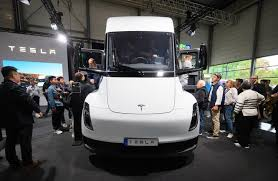
After nearly a decade of delays, false starts, and shifting priorities from Elon Musk’s clean energy empire, the Tesla Semi has finally rolled onto American highways. And in a surprising twist, the notoriously hard-to-please trucking community is giving it a thumbs up.
For years, the idea of an electric big rig was met with skepticism from those who live their lives behind the wheel. But now that the rubber is meeting the road, drivers are reporting that this futuristic machine, with its central cockpit and sci-fi styling, is changing how they work.
A Decade in the Making
Tesla first unveiled its vision for a battery-powered semi-truck back in 2016, but a series of setbacks kept the vehicle in limbo. Now, with production ramping up at the Nevada Gigafactory, the company is preparing to ship between 5,000 and 15,000 units this year, with plans to scale to 50,000 annually soon after. The long-awaited arrival couldn’t come at a more critical time, as the logistics industry grapples with rising fuel costs and increasing pressure to decarbonize.
The Gamechanger Behind the Wheel
So, what’s winning over the skeptics? For many drivers, the first surprise comes the moment they sit down directly in the center of the cab.
“I backed right out of there, no problem. It’s like I’d never done it in the first place,” said Dakota Shearer, a driver who found himself stuck in a tight turn during a test drive in Sparks, Nevada. The central driving position eliminates the traditional right-side blind spot, while massive screens on either side provide a complete view of the surroundings.
Veteran truckers accustomed to wrestling with 13-speed manual transmissions and heavy clutches are also finding physical relief. Angel Rodriguez, 56, who drove the Semi for a month-long trial, noted how much easier it was on his body. “It’s less stressful because you’re not really having to engage the clutch and the stick shift,” he told reporters.
More Than Just a Cool Cockpit
Beyond the ergonomics, the economics are turning heads. The Semi boasts a 500-mile range on a single charge, a crucial figure for long-haul operators. It charges four times faster than competitors, capable of reaching 60 percent battery capacity in roughly 30 minutes.
For fleet owners, the math is starting to add up. Jennie Abarca, CEO of King Fio Trucking in Long Beach, California, has tested other electric semis but found them lacking due to a 360-mile range cap. The Tesla changes that.
“It opens up a whole different type of delivery that I can make,” Abarca said. With the ability to reach Las Vegas and back without range anxiety, she is now planning to convert her fleet of 27 diesel trucks to Tesla Semis.
The reduced maintenance costs are another major selling point. Without a massive diesel engine, transmission, or drivetrain to maintain, downtime for repairs drops significantly. One transport company noted that while they currently need five mechanics for their diesel fleet, a shift to electric would require just one technician to handle the chassis.
Navigating the Potholes
Despite the glowing first impressions, the road to full adoption isn’t entirely smooth. The biggest hurdle remains the charging infrastructure. While Tesla is building a network of “mega chargers” along key freight corridors in California, Texas, and the Northeast, the national network isn’t ready for widespread use yet.
There are also growing pains associated with the unique design. While drivers love the central seat for highway visibility, some have noted it complicates the simple act of handing paperwork to a security guard at a warehouse gate, a maneuver usually done from the driver’s side window.
Still, for an industry often defined by its resistance to change, the arrival of the Tesla Semi has sparked a level of excitement rarely seen since the transition from steam to diesel. As truckers navigate their new centrally positioned cockpits and enjoy the silent, jolt-free acceleration, it seems the electric future of freight might finally be here.