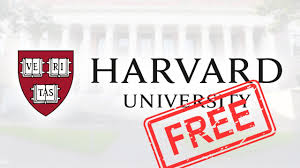
If you’ve ever dreamed of adding “Harvard” to your résumé but thought the closest you’d get was a campus tour or a hoodie from the bookshop, it’s time to sit up straight. The Ivy League giant has just announced six new free online courses covering artificial intelligence, web development, and core programming, and no, you don’t need perfect SATs, a personal essay, or a small fortune in tuition.
Let me repeat that: free, self-paced, and open to anyone with an internet connection.
The courses, hosted on Harvard’s platform (edX), are part of the university’s ongoing push to democratize high-level tech education. While a paid verified certificate option exists, full access to course materials, video lectures, assignments, and exams costs exactly zero dollars. Auditing is completely free.
So, what’s actually on the menu?
1. CS50’s Introduction to Artificial Intelligence with Python
This is the one generating the most buzz. Building on the legendary CS50 course, this AI track dives into graph search algorithms, neural networks, natural language processing, and Markov models. You’ll build projects like a tic-tac-toe AI that actually learns, a “minesweeper” AI that plays smarter than your uncle, and a nearest-neighbor classifier. It’s taught by David J. Malan and Brian Yu, whose names carry serious weight in online learning circles.
2. CS50’s Web Programming with Python and JavaScript**
Think you can build a functional e-commerce site from scratch? After this course, you probably could. It covers HTML, CSS, Git, Django, SQL, and responsive design. The final project alone (often a full-stack web app) has landed past students internships and even junior dev roles. It’s intense, project-based, and deeply satisfying.
3. CS50: Introduction to Computer Science
The legendary CS50 itself. If you’ve never written a line of code, this is the starting line. It covers C, Python, SQL, JavaScript, and even touches on Flask. The problem sets are famously challenging but come with walkthroughs and a supportive global community. More than 5 million people have taken it. It’s the gold standard.
4. Using Python for Research
Less flashy than AI, but quietly more useful for data folks. This one assumes you already know Python basics and focuses on applying it to statistical modeling, data visualization, and replicating research findings. Perfect if you’re in academia, data science, or just want to move beyond “Hello, World.”
5. Data Science: Machine Learning
Part of Harvard’s professional data science certificate track, this course covers cross-validation, regularization, and model tuning. You’ll use R, not Python, which is a key distinction. If your goal is to work in health, finance, or social sciences, this is a gem.
6. Introduction to Programming with Scratch
Yes, the drag-and-drop block language is designed for kids. But don’t roll your eyes, this is how Harvard teaches absolute beginners to think like programmers before the syntax gets in the way. Perfect for a 12-year-old or a 50-year-old career-switcher who’s intimidated by semicolons.
Why this matters right now
Let’s be honest: tech bootcamps can cost $15,000. Traditional degrees take four years and a mountain of debt. Harvard’s move isn’t altruistic charity – it’s strategic. The university gets to recruit future degree-paying students, and edX (now part of 2U) sells certificates to those who want proof. But for the learner who just wants skills? It’s a no-brainer.
I spoke with one recent CS50 completer, a former restaurant manager in Ohio, who used the web programming course to build a local business directory. He now freelances full-time. “I never stepped foot in Cambridge,” he told me. “But my GitHub link says Harvard.”
What’s the catch?
No catch, but fine print: you don’t get grades or a verified certificate unless you pay (usually $150–$300 per course). But you *do* get access to all lectures, problem sets, and auto-graded assignments. You can even submit work for feedback. For 99% of self-taught learners, that’s more than enough.
The real challenge is time. Each course demands 6–12 weeks of effort, with 6–15 hours per week. AI and web programming are particularly heavy. This isn’t “watch a few YouTube videos and call it a day.” It’s real coursework.
How to enroll
Go to edX.org, search “Harvard University,” filter by free, and computer science. Click “audit” or “free access,” not the verified track. You’ll need to create an account, but that’s it. Start anytime. Go at your own pace.
One warning: the forums move fast. CS50 alone has thousands of active learners worldwide at any given moment. Don’t be shy. Ask questions. Help others. That’s where the real learning happens.
The bottom line
Harvard didn’t have to do this. They could keep their lectures behind a $70,000 paywall. But they didn’t. Whether you’re a high school student curious about AI, a marketing manager trying to pivot, or a retired nurse who always wondered what coding felt like, the door is open.
No application. No tuition. Just you, your laptop, and a world-class education.
Now the only question left is: which course do you start first?