
For two decades, the mantra of the digital economy was simple: People are your greatest expense.
Not anymore. Meet the new line item eating the corporate world alive. It doesn’t take sick days. It doesn’t file HR complaints. And it costs more than your entire engineering team combined.
It is the silicon brain. And the receipt is stunning.
According to a confidential ledger reviewed by this reporter from a mid-stage AI unicorn (let’s call it “Nebula Dynamics”), the company’s monthly cloud compute bill from Amazon Web Services and a custom cluster of Nvidia H100 GPUs now exceeds $2.7 million. The company’s total human talent payroll, including equity and benefits for 85 engineers, product managers, and sales staff, sits at $2.1 million.
That is a 28 percent premium for servers over souls.
“We’ve entered the era of ‘Compute-First Accounting,’” says Mira Stoltz, a former treasury director at OpenAI who now consults for Fortune 500s on AI infrastructure. “CEOs are having the same panic attack I saw during the 2021 shipping crisis. Except this time, you can’t find a cheaper container ship for your GPUs. The GPUs are the factory.”
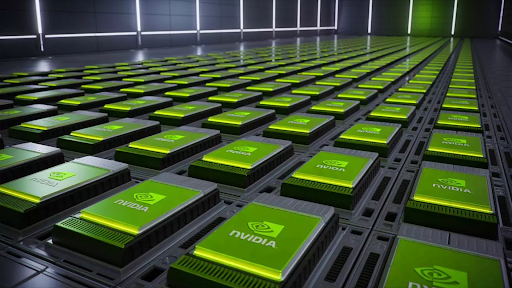
The math is brutal and unforgiving. A single Nvidia H100, the gold standard for training large language models, retails for roughly $30,000 if you can find one. Most can’t. So they rent. At current spot prices on AWS, a single H100 runs $4.10 per hour. Sounds cheap? Multiply that by 10,000 chips running 24/7 to train a marginal upgrade to a chatbot, and you are burning $984,000 per day.
“We paid 750 people six-figure salaries to build search,” says a CTO of a now-defunct consumer AI startup, requesting anonymity to preserve his severance. “We fired them all because our board demanded we ‘go all in on inference.’ Six months later, we couldn’t afford the electricity to run the model. We died with a perfect product and a $40 million GPU debt. The machines ate our lunch, then ate our table.”
This inversion of labor economics is spawning a bizarre new corporate pathology: the “Ghost Colleague.” Walk into any well-funded AI firm in San Francisco or London, and you will see rows of empty desks. The humans work remotely. But the server racks? Those hum 24 hours a day in exurban data centers, each rack consuming as much power as a suburban home.
“We treat our clusters like rock stars,” admits Leo Chinn, a datacenter architect for a hyperscaler. “We have on-site mechanics, liquid cooling specialists, and security guards with rifles for the H100s. The human engineers get a coffee stipend and a standing desk. The GPUs get armed guards. Tell me what the company values.”
The consequences are rippling beyond tech. Investment banks are now offering “Compute-Backed Securities,” essentially mortgages on future GPU hours. Utilities are charging peak-demand surcharges for AI firms that make bitcoin miners look polite. And for the first time in history, production economists at the Bureau of Labor Statistics are debating whether to reclassify cloud computing as a “primary operating expense” on par with rent and wages.
“We used to ask, ‘Will AI take our jobs?’” says Stoltz. “That was the wrong question. The real question is: ‘Can our company even afford to keep the AI running?’ We have entered a world where the marginal cost of a single question asked to an advanced model costs more than the hourly wage of the person asking it.”
In a telling moment last week, a leaked memo from a major social media platform’s efficiency team went viral. The directive was not about layoffs. It was about rationing. Employees are now limited to 50 queries per day on the company’s internal LLM.
The reason? Not security. Not quality.
“Each query costs $0.12 in compute,” the memo reads. “Our human employees cost $0.07 per minute of labor. Please ask yourself: Is this question worth more than a minute of a colleague’s time?”
The machines haven’t just beaten us at chess. They’ve beaten us on the P&L statement. And for the first time, the budget doesn’t lie: In the age of AI, the most expensive thing in the room isn’t the talent.
It’s the electricity running through the floor.