
Let’s be honest: asking an AI to draw “a cat reading a tax document in ancient Egyptian hieroglyphs” has, until now, been a recipe for beautiful nonsense. The cat would look photorealistic, sure. But those hieroglyphs? Gibberish. And if you asked for text in, say, Japanese or Arabic? The AI would shrug its digital shoulders and serve up beautiful, meaningless squiggles.
Not anymore.
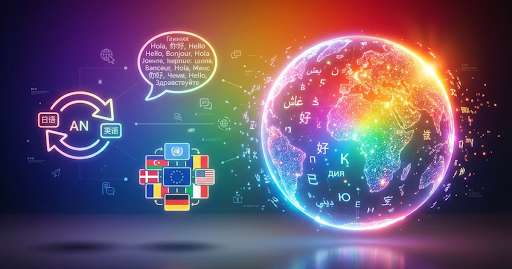
OpenAI has just pulled back the curtain on a major upgrade to its image generation architecture, one that whispers a quiet yet powerful threat to rivals like Midjourney and Google’s Imagen. The new model, quietly rolled out in ChatGPT for a subset of users late Tuesday, doesn’t just draw prettier pictures. It reads, writes, and thinks in dozens of languages.
In internal tests, the model generated a flawless multilingual restaurant menu, complete with correctly spelled dish names in Thai, Mandarin, and Spanish on the same sign. It produced a vintage-style propaganda poster in flawless German. And yes, it finally nailed hieroglyphs.
“We realized that most image models treat text as an afterthought, basically, ‘just paint something that looks like letters,’” says Mira Chen, an OpenAI researcher who worked on the project. “We flipped that. Our model understands the meaning of the text it’s rendering. That changes everything.”
The ‘Rosetta Stone’ moment
In a live demo for reporters, OpenAI showed an image prompt that would have broken previous models: “A chalkboard outside a Paris café. Specials written in French, with prices in euros. Below is a handwritten Japanese note apologizing that the croissants are sold out. In tiny print at the bottom in English: ‘Try the quiche.’”
The result was stunning. Not only were every character’s accents, currency symbols, and even the casual slant of handwritten Japanese, but the English quiche note was subtly smaller, just as requested. No weird artifacts. No hallucinated letters.
“It’s a Rosetta Stone moment for generative art,” says Dr. Lev Korovin, a computational linguist not involved with the project. “Most models treat language as decoration. This one treats it as data. That means advertisers, graphic designers, and localizers just lost a major headache.”
Global market, local touch
The implications go far beyond meme generation. Imagine a small business owner in Mexico City who wants to create a promotional flyer in Spanish, English, and Nahuatl. Or a nonprofit producing educational posters in Swahili and Luo. Or a travel blogger generating welcome signs in twenty languages for a single Instagram post.
OpenAI isn’t saying much about the training data except the usual lawsuits from artists and publishers in a few months, but the model clearly understands contextual grammar, gendered nouns, and even regional dialects. Ask for “street food signage in Mumbai,” and the Hindi script will shift subtly depending on whether you add “tourist area” or “local market.”
The company claims the model is already live for ChatGPT Plus users, with a wider rollout “in the coming weeks.” Pricing hasn’t been announced, but given how computationally expensive multilingual rendering is, don’t expect this to stay free.
Not all fun and fonts
Of course, new power brings new risks. Early testers have already used the model to generate hyper-realistic fake ID cards, propaganda in minority languages, and fraudulent restaurant health inspection certificates. OpenAI says it has implemented “robust content filters” and watermarking, but if history is any guide, cat-and-mouse games with bad actors will begin within days.
For now, though, the design world is buzzing. On Reddit’s r/StableDiffusion, one user posted a side-by-side comparison of the new model versus last month’s version. The prompt: “A shop sign in Kolkata, handwritten Bengali, saying ‘Fresh fish today, best prices.’”
Last month’s result: pretty squiggles. This month’s: a sign your Bengali grandmother could read.
Underneath, a comment with thousands of upvotes simply reads: “Finally. The robots learned to spell.”