

Let me paint you a nightmare. It’s Sunday night. Your supply chain just collapsed. Your top developer quit. And your office lease is a guillotine hanging over your neck.
Now imagine this: You shrug and spend the weekend taking your entire business apart, then rebuilding it from scratch by Monday morning.
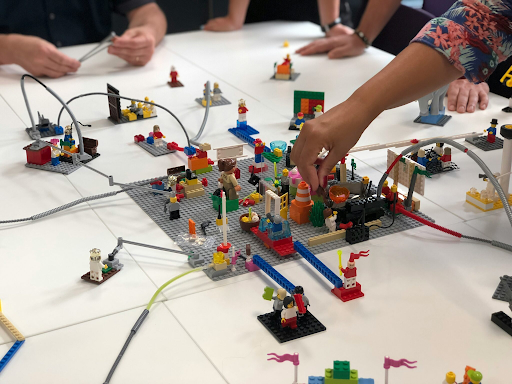
Sounds insane. Unless you’re part of a quiet but growing movement of founders building what I call “Lego businesses.”
These are companies designed not for permanence, but for reconfigurability. They can be disassembled into core blocks on a Friday, rearranged, and snapped back together before the workweek begins.
Rule 1: Your Product Is a Plugin, Not a Monolith
Forget the 200-page product roadmap. A takedown-ready business sells one atomic service or digital good that doesn’t require a team of 12 to operate.
Take Maria Kondo (no, not that one—Maria from Austin). She runs a $400k/year business called SlideShift, a pop-up corporate training on AI tools. Her entire product is a 90-minute workshop, a PDF workbook, and a Canva template. That’s it.
“If I wanted to disappear for a month,” she said, “I’d just archive the calendar link and turn off Stripe. No customers stranded. No code rotting.”
Her product blocks: one workshop (block A), one automation (block B), one template (block C). She can remove, replace, or duplicate any block in an afternoon.
Rule 2: People Are Swappable Roles, Not Irreplaceable Stars
This is the hard one. Most founders build cults of personality. The Lego founder builds systems of responsibility.
Every function in the business, fulfillment, support, marketing, and finance, is documented as a 90-minute video on Loom and a checklist SOP. Not because you don’t trust people, but because you want people to be able to step in and step out without a funeral.
Jake Hernandez runs Weekend Roast, a tiny e-commerce brand that sells coffee grinders. He has three part-time contractors who each know two roles. Last month, his shipping lead got COVID on a Thursday. By Friday evening, his customer support person had swapped into shipping, a VA moved into support, and Jake covered VA work. By Monday, all packages will be shipped.
No panic. Just plug-and-play.
Rule 3: Zero Emotional Real Estate
You cannot build a takedown business if you treat your logo like your firstborn.
The Lego founder rents software (never buys multi-year contracts). They avoid custom code. They use a single source of truth—often just Airtable or Notion—so that “taking apart” means archiving six views, not untangling 47 integrations.
And critically: They don’t have a physical office. Not a closet. Not a desk. Everything fits in two backpacks: a laptop, a backup hotspot, a portable monitor, and a folder of printed SOPs for the apocalypse.
The Weekend Rebuild Test
Want to know if your business qualifies? Try this Friday afternoon drill:
- Write down every tool, person, and process.
- Ask: If I deleted this, could I recreate it in under 4 hours?
- If the answer is no, that block is too big. Break it down.
One founder I follow actually does a “nuclear test” every quarter: She archives her entire Shopify store, deactivates her email sequences, and then rebuilds everything from her backup blocks. First time took 14 hours. Last time: 3 hours.
But Why?
Because the old dream of the immortal, ever-growing company is becoming a curse. Long-term leases, irreplaceable employees, tangled tech debt… that’s not resilience. That’s a trap.
The new dream is smaller. Smarter. It’s a business you can park on a Friday, knowing that if the world changes over the weekend, you can change right back with it.
As Maria from Austin put it: “My business isn’t a castle. It’s a tent. And I can pack up that tent faster than most people can answer their Sunday night Slack messages.”
This Monday morning, ask yourself: If you had to, could you take it all apart?
If not, maybe it’s time to start building with blocks.